Preface
The SMPS technology has passed through several stages of development since its inception. The SMPS technology was developed in the mid 20th century and it was a significant advancement in the power supply technology because it offered an increased efficiency and a smaller size in comparison with the linear power supplies. The history of SMPS development is closely connected with the history of semiconductor technology and switching regulators evolution for several decades and now SMPS is one of the fundamental technologies in electronics. SMPS is now used in any appliance ranging from mobile phone chargers to industrial machines.
What is SMPS?
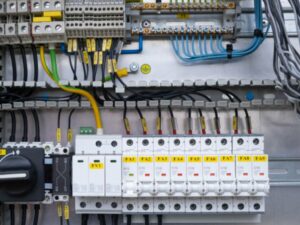
SMPS stands for Switched Mode Power Supply which is an electronic power supply system that converts electrical power with the use of a switching regulator. SMPS operates on the concept of switching on and off at high frequency as opposed to linear regulators; it utilizes components such as bridge rectifier for AC to DC conversion and DC converter for converting the voltage to the desired level. The full form of SMPS highlights its core functionality: a power supply unit that controls the voltage fluctuations by using high-frequency switching networks and control loops to supply DC power to a load from an AC or DC source. The design of SMPS is challenging because it employs a switching circuit and reference voltage to regulate the output voltage; this is suitable for applications where the voltage must be maintained at a constant level and power consumption is of paramount importance.
Advantages and Disadvantages of SMPS

Switched-Mode Power Supplies (SMPS) offer several advantages: they can be as high as 90% efficient compared to 30-40% for linear power supplies and their high frequency operation reduces the size and weight of transformers and capacitors used in the circuit. Additionally, SMPS can run on varying input voltage levels, hence, making them suitable for various conditions and sources of power. They also generate less heat as they use power transistors which are either on or off and also have a better power factor which implies that they are more power efficient than linear power supplies. But SMPS also have disadvantages like the design and manufacturing process is more complicated than other power supplies and hence may be costly in terms of using components like switching transistors and feedback circuits. They are vulnerable to changes in load and require careful design and testing of the stability of the feedback circuits and PWM duty cycles. Moreover, the high-frequency switching may produce electromagnetic interference (EMI) and thus, the converter needs to be filtered and shielded to prevent electromagnetic pollution of other electronic equipment.
Comparing SMPS with Linear Power Supplies
| Feature |
SMPS |
Linear Power Supplies |
| Efficiency |
Up to 90%, less heat generation |
Typically 30% to 60%, more heat generation |
| Size and Weight |
Compact and lightweight due to smaller components |
Bulkier and heavier due to large heat sinks |
| Input Voltage Range |
Wide range, adaptable to various power sources |
Narrow range, designed for specific input voltages |
| Heat Dissipation |
Minimal due to switching action |
High due to continuous regulation |
| Design Complexity |
Complex, requires specialized components and design |
Simpler, fewer components needed |
| Electromagnetic Interference |
Can generate EMI, requiring additional filtering |
Less EMI, inherently quieter operation |
| Cost |
Higher due to complexity and specialized components |
Lower, simpler design and fewer components |
Applications of SMPS
-
Consumer electronics (e.g., mobile phone chargers, televisions, and computers)
-
Medical (e.g., medical imaging devices, patient monitoring systems, and diagnostic equipment)
-
Industrial and Automation (e.g., PLCs, robotics, and industrial machinery)
How Does SMPS Work?
Key Components of SMPS
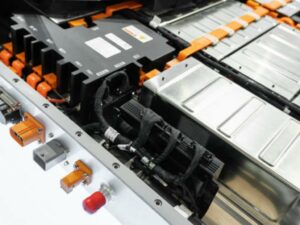
Each component is very important for the operation of smps.The major components of an SMPS are switching transistor, transformer, rectifier and feedback circuit. The switching transistor is responsible for the function of transforming the input energy into high frequency pulses. The transformer then boosts or cuts the voltage depending on the need. The rectifier is employed to convert the AC input into DC output while the feedback circuit is employed to measure the output voltage and modulate the duty cycle of the PWM to regulate the output voltage. This feedback mechanism assists in regulating the voltage variations in the SMPS and in providing the desired DC voltage.
The Working Principle
The mode of operation of SMPS is the conversion of electrical power with high frequency switching. When the SMPS is in an active state, the switching transistor is turned on and off in a very short duration and hence the output is a series of high frequency pulses. These pulses are passed through the transformer and rectifier employed for converting the AC supply to the desired DC voltage. The negative feedback from the output voltage is used to regulate the duty cycle of the PWM in order to keep a constant voltage. This efficient method of power conversion results in higher efficiency and lower heat dissipation as compared to linear power supplies.
Types of SMPS
Non-isolated Topologies
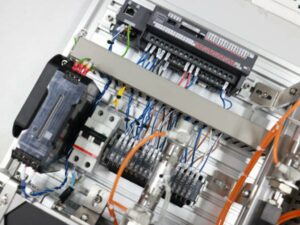
Non-isolated topologies in SMPS do not use a transformer to provide electrical isolation between the input and output circuits. Some common types include buck converters, boost converters, and buck-boost converters. A buck converter is used to decrease the input voltage to a lower voltage while a boost converter is used to increase the input voltage to a higher voltage. Buck-boost converters can be used to either increase or decrease the input voltage. These non-isolated topologies are simpler in terms of design and are more efficient for low to medium power applications.
Isolated Topologies
Isolated topologies use a transformer which provides electrical isolation between the input and the output. This is crucial for safety and noise reduction in different applications. Some common examples are flyback, forward, and push-pull converters. Flyback converters are widely used in low-power applications due to their simplicity and affordability. The forward converters are suitable for medium power ratings and the push-pull converters are suitable for high power ratings. The isolated topologies are employed to deliver safe and stable output voltage to delicate electronic devices.
Regulations and Standards for SMPS Manufacturing
There are standards that are used to make sure that the manufacturing of SMPS is done in a safe and efficient manner. In the United States some of the standards for EMI and electrical safety are offered by the Underwriters Laboratories (UL) and the Federal Communications Commission (FCC). Compliance with these standards is crucial for the SMPS manufacturers to prevent issues like voltage drops and guarantee that their devices function effectively. Internationally, IEC has guidelines that address various issues of SMPS like power factor correction and efficiency.
One more parameter that manufacturers have to consider is the appropriate input and output voltage for their products. This involves the ability to control the AC supply to the SMPS and the DC output of the SMPS. These regulations not only guarantee the safety and effectiveness of SMPS units but also their longevity in various applications.
Safety Precautions When Working with SMPS
Safety is a big concern when using SMPS since these devices are used at high voltages and currents. It is therefore important to note that before any maintenance or adjustment is done on the power supply unit, it must be confirmed that the unit is not connected to the mains power. The circuit board must be properly isolated and earthed to prevent electric shocks. It is also important to wear protective gear like gloves and safety glasses to prevent injuries.
When building or repairing an SMPS, it is crucial to understand the specific power requirements and voltage regulation techniques. This includes the knowledge of possible electromagnetic interference and the correct functioning of all components including the pass transistor and the feedback circuits. One can easily eliminate the issues related to the changes in voltage and the unregulated DC output by performing the regular testing and validation of the SMPS design.
Conclusion
The field of SMPS is still evolving with the major advancements focusing on the further enhancement of the efficiency and downsizing and cost reduction. Recent developments include the employment of higher frequency bands and the incorporation of more effective semiconductor substances for enhanced performance. Digital control systems allow for better voltage regulation and power factor correction. These innovations are responsible for the increased application of SMPS in different applications.
Other trends in the development of SMPS technology also include the environmental friendliness and energy efficiency. The further development of the switching regulators and the feedback circuits is of great significance for the total power consumption. Further, there are new developments in thermal management and heat dissipation that are also reducing the heat produced by SMPS units to improve their reliability and service life. With the further advancement of these technologies SMPS will turn out to be one of the most important and crucial components in the future electronic devices and systems.


 English
 Spanish
 German
 Russian