
Preface
Switching power supplies are essential components for most current technologies due to their multiple and efficient functions in many devices. Furthermore, switching power supply differs from the conventional power supply that offers power in a linear way through a power transistor instead of providing fixed power supply in an electrical manner through a transistor in a linear way. They will aim to help the reader understand basic concepts in switching power supplies, including their uses, how they operate and some of the common varieties as well as how to maintain them correctly.
What is a Switching Power Supply?
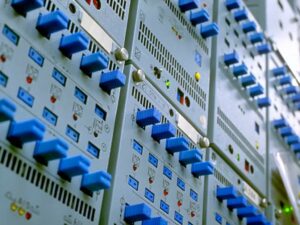
SMPS has been in use since the mid 20th century and has greatly transformed power management. Originally used in industrial and military applications, SMPS have now found their way into consumer electronics mainly because of their high efficiency and small size. In contrast to linear power supplies that control the output voltage through dissipating energy, SMPS utilizes high-frequency switching to control and transform electrical power with low energy loss. This characteristic makes them highly efficient and suitable for a variety of applications including small portable devices and large industrial equipment.
SMPS vs. Linear Power Supply
| Aspect | Switch Mode Power Supply (SMPS) | Linear Power Supply |
| Efficiency | High (80-90%) due to high-frequency switching | Low (30-60%) due to energy dissipation |
| Heat Generation | Low, minimal energy loss | High, excess energy is dissipated as heat |
| Size and Weight | Compact and lightweight due to high-frequency components | Bulky and heavy due to low-frequency transformer |
| Voltage Regulation | Excellent, maintains constant voltage with feedback | Good, but less efficient under varying loads |
| Noise | Higher noise due to high-frequency switching | Low noise, suitable for sensitive audio and RF applications |
| Cost | Moderate to High, depending on design | Lower, simpler design |
| Complexity | More complex, requires more components | Simpler, fewer components |
| Applications | Consumer electronics, industrial automation, telecommunications, medical devices | Audio equipment, lab instruments, low power applications |
Application of Switching Power Supply
Switching power supplies are employed in many sectors because of their effectiveness and applicability in different fields.
- Consumer Electronics (e.g., Smartphones, Laptops)
- Industrial Automation (e.g., Robotics, CNC Machines)
- Telecommunications (e.g., Base Stations, Network Routers)
- Medical Devices (e.g., MRI Machines, Diagnostic Equipment)
How Does a Switching Power Supply Work?

Understanding how a switching power supply works requires a look at its key components and the step-by-step process of power conversion.
Key Components of SMPS
-
Rectifier and Filter: the AC input is converted to DC and filtering out of noise is done. The diodes in the rectifier are used for converting AC to pulsating DC while the role of filter is smoothing out the ripples that occurs so as to have a constant DC voltage.
-
High-Frequency Switch: typically, it uses transistor or MOSFET which turns on/off very fast thus converting DC into high frequency AC signal. Such switching is vital for efficient operation of power supplies.
-
Transformer: in isolated topologies, voltage up or down conversion is achieved by the transformer. It provides galvanic isolation between input and output stages allowing safety and voltage regulation.
-
PWM Oscillator: control over switching frequency and duty cycle is provided by Pulse Width Modulation (PWM) oscillator which adjusts the on and off times of the high-frequency switch to regulate output voltage.
-
Feedback Circuit: this outputs an adjustable feedback signal based on output voltage, back to pulse width modulation oscillator; thereby ensuring a steady output at all times.
-
Output Filter: this set up composed of capacitors as well as inductors smoothes out the direct current, minimizing ripple effects and noise making it a constant cleaner stable load.
The SMPS is made up of several vital parts that are very instrumental in power switching and regulating. With a good knowledge of these components one can appreciate the intricacy involved in SMPS.
Step-by-Step Process
The following is a detailed step-by-step description of the operation of an SMPS (Switch Mode Power Supply) using the diagram.
The input AC voltage first goes through rectification, followed by filtering. In rectification, diodes are used to convert ac into pulsating dc while filtering which consists of capacitors and inductors smoothens out these pulsations producing high voltage low frequency DC output. This initial step is important in all DC power supplies so they can change voltage steadily during the upcoming stages.
High voltage DC is supplied to a high frequency switch which can be transistor or MOSFET. These switches operate at 15-50 kHz, this means that they either turn on or off quickly and the DC is thus converted to high frequency AC signals. To obtain high efficiency and miniaturize the transformer, the DC is converted into high frequency AC and fed to the high frequency transformer primary which steps down the voltage to nearly the desired voltage. Then the output of the transformer is rectified and filtered and regulated to the desired output voltage. The switch mode power supply itself is thus this high frequency switch.
Signals are passed through a transformer where they become high-frequency AC signals . This transformer can be quite small and light. The main function of the transformer here is to adjust the voltage level either upwards or downwards using electrical isolation between input/output that guarantees safety and ensures proper voltage regulation. This acts as an important stage for proper functionality and safety concerns related to SMPS.
Another rectification-cum-filtering process needs to be carried out on this transformed voltage which is still in the form of high frequency AC. The second rectification changes this high frequency AC back to DC while the filter smoothens the DC voltage by removing any remaining HF noise as well as ripple. Finally, stable low voltage DC is achieved which is appropriate for driving different loads. Such a process helps to ensure that the power supply’s output remains constant.
To keep the desired output voltage stable within specification, feedback circuit must be employed. This circuit constantly monitors output voltage utilizing an output sensor. Feedback information is then transferred back to PWM oscillator via error amplifier and isolation circuit. The PWM oscillator modulates duty cycle of high frequency switch based on this feedback signal. If the output voltages deviates from desired values, PWM controller adjusts its switching pattern accordingly ensuring constant voltage out put.
Types of Switching Power Supply Topologies
Non-Isolated Topologies
Non-isolated topologies are less complex and more effective but they do not have electrical separation between the input and the output. They are commonly employed in systems that do not need to have their signals isolated from one another. These topologies are most suitable for scenarios where space and cost are major considerations.
-
Buck Converter: a buck converter is a type of voltage regulator that reduces the input voltage to a lower output voltage. It is very effective for applications where lower voltage levels are needed, like powering microprocessors and low voltage gadgets. The high frequency AC produced by the switch is then filtered to give a stable DC voltage.
-
Boost Converter: a boost converter increases the input voltage to a higher voltage at the output. This converter is very handy in battery operated equipment where the battery voltage needs to be stepped up to a higher value for some operations. It deals well with changes in the power source and is one of the most used converter configurations.
-
Buck-Boost Converter: a buck-boost converter has the ability to either step up or step down the input voltage, making it suitable for a wide range of voltage input. It is used in applications where the input voltage can be either above or below the desired output voltage, such as in battery operated devices. This complete converter offers versatility in different power conversion applications.
Isolated Topologies
Isolated topologies provide electrical isolation between input and output, enhancing safety and reliability. These topologies are essential in applications where isolation is necessary to protect the user and equipment from high voltages and to prevent ground loops.
-
Flyback converter: the flyback converter is simple and cost-effective, suitable for low to medium power applications. The converter’s isolation is done by a transformer whilst it is also capable of handling a wide range of input voltage making it ideal for consumer electronics power supplies and industrial control.
-
Forward converter: the forward converter offers higher efficiency and is suitable for medium power applications. An additional inductor together with the transformer increases its efficiency while reducing its ripple content. This particular type of converter has been used extensively in telecom power supplies and industrial systems.
-
Half-bridge converter: the half-bridge converter provides good efficiency and is used in medium or high power applications. Voltage transformation as well as isolation are achieved through using two switches together with a center-tapped transformer. This topology fits perfectly into uninterruptible power supplies (UPS) or motor drive instances like these where its reliability has often been applied in big stores.
-
Full bridge converter: the full-bridge converter is suitable for high power applications; it offers excellent efficiency and high power handling capabilities. By driving this transformer with four switches, the four switches convert produce high amounts of energy due to increased output powers involved . High-end telecommunication equipment manufacturers often use this type of converters in their devices. Its block diagram shows how intricately efficient it operates.
-
Push-pull converter: the push-pull converter is efficient and versatile, used in various power ranges. In order to provide voltage conversion then isolation, two transistors alternately drive the transformer—thus generating an electric field around it. Audio power amplifiers and battery chargers most commonly employ this topology. It even has better performance on handling high current when compared to linear regulators.
All of these topologies accommodate different power requirements and working conditions, in order to achieve optimal balance between efficiency, cost and complexity. Several essential modern appliances that depend on such designs for continuous.Understanding knowledge of topologies will enable you to negotiate a better deal when choosing an appropriate power supply.
How to Select the Right Switching Power Supply for Different Applications?
-
Input Voltage Range: make sure that the power supply is capable of accommodating fluctuations in the input voltage, as well as the difference in the mains frequency (either 50Hz or 60Hz). This is important to ensure that the equipment conforms to the local power supply standards.
-
Output Voltage and Current: ensure that the output voltage and current of the device is as desired. The output voltage can be further adjusted by using a variable resistor.
-
Efficiency: select a power supply that has high efficiency to minimize power loss and heat production. This is important to ensure that the size remains small and the performance is predictable and consistent.
-
Size and Form Factor: make sure that the power supply is compatible with the size of the application that you are working on. This is especially the case for small form factor devices such as cell phone modules and camera modules.
-
Regulation and Noise: choose a power supply with a stable voltage and low noise. This is crucial for delicate electronics to guarantee that they will work efficiently without the influence of external interferences.
-
Environmental Considerations: take into account the operating conditions and select a power supply with the right temperature regulation and housing. This is particularly relevant for applications in extreme environments.
-
Cost and Budget: compare the cost with the amount of money you are willing to spend, taking into account the advantages of reliability and productivity in the long run. Search for coupon codes and compare different SMPS models on a comparison site to find trustworthy vendors.
-
Compliance and Certifications: make sure the power supply meets the necessary certifications and safety requirements such as UL, CE, and RoHS. Adherence to the rules and regulations is important to avoid any form of danger and to guarantee the quality of the product.
-
Special Features: search for other features such as integrated charge pump or better cooling solutions that may be useful in your application. Special features can improve the performance and flexibility of the system.
-
Manufacturer Support and Warrant: It is also important to consider the support and warranty provided by the manufacturer. Good customer support and a reasonable warranty period can help avoid problems.
If these factors are well considered, it will be easier to choose the appropriate switching power supply for your application. Spending a couple of minutes to go over these points can prevent problems and guarantee that your devices run smoothly and effectively.
Maintenance Tips for Prolonging the Life of SMPS
Prevent your switching power supply from overheating and ensure the optimal flow of electric current by keeping it clean from dust and dirt. The accumulation of dust can lead to reduced efficiency in terms of voltage drops, which will definitely affect the general performance of SMPS. Make sure you clean these parts regularly using a soft brush or compressed air.
Make sure all electrical connectors are tight and free from rusting. When these connections become loose or corroded, they will lead to a reduction in voltage and power flow interruptions that can cause damage. Regularly inspect the terminals as well as connectors to maintain a constant voltage output.
Monitor your SMPS operating temperatures. This may result in damages like those on high-frequency switch, output capacitor, and transformer because of excessive heat. Use temperature sensors or infrared thermometers instead that could stay according to the recommended manufacturer’s range.
Check for deterioration signs among key components such as capacitors, transformers, and inductors. Faulty output capacitors could easily lead to instability and ripple voltages while worn out inductors influence power converter efficiencies.
When necessary, update your SMPS firmware. Firmware updates are usually issued by manufacturers for improving its performance; remove bugs and enhance control loop functions relating to power supply system used thus broadening its applicability. Look into new versions on the manufacturer’s website then download them as guided.
For avoiding excess heating make certain that proper ventilation is maintained within your switching power supply systems.Such equipment should be placed where there is enough air circulation hence no blocking over SMPs ventilation slots.Proper ventilation helps maintain steady temperatures while increasing service life hence enhancing durability of electrical equipment through continuous operation.
Use superior quality replacements that are compatible with your SMPS specifications.Substandard parts can make your system fail prematurely and function irregularly. Such electrical equipment must be able to carry large direct currents without any interruptions.
Do not overload the power supply beyond its rated capacity because this may result in excessive heat build up leading to switching regulator failure as well as other parts damage.Using loads within the recommended range leads to longer life and more reliable operation.
Regularly check for voltage drops in its output. These could be due to various issues like those from the source of power, connectivity or even some components of the machine itself. Correcting these ones will save it from further damage hence ensure stable voltage output.
Power factors must be good on your SMPS monitoring.Poor power factor leads to inefficient operation, consequently raising energy bills when such devices are used.Power factor correction devices should be bought if not available for improving efficiency in your power supply.
By cleaning, checking components, and ensuring proper ventilation, you can keep your switching power supply running smoothly for a long time and avoid costly breakdowns. If you adhere to these tips, your SMPS would operate at maximum efficiency thereby avoiding common problems associated with it.
Conclusion
There are many benefits associated with switching power supplies such as high efficiency, small size, and consistent performance. With knowledge of how they work, the different types, and where they are used, you can apply this technology to improve your devices and systems. Proper selection and maintenance of the SMPS will help in getting the best performance and durability of the SMPS.
Trusted Switching Power Supply Supplier

OMCH is a dependable and progressive provider of switching power supplies. Established for years, OMCH has been dedicated to offering customers high quality products to fulfill their requirements. The team of experts at OMCH has professional knowledge in power supplies and offers a comprehensive range of power solutions for different applications ranging from industrial automation to consumer electronics.
Moreover, OMCH has a strong position in the market due to its focus on quality and innovation of products. Products are developed with state-of-the-art technology to make them efficient, reliable, and long-lasting. Quality control measures are put in place to ensure that only quality power supply units are produced and released to the market.
FAQs
Why it is necessary to compare different SMPS models on a comparison site?
When one selects a comparison site, one is able to compare different SMPS models in terms of features, performance, price, and customer feedback. This comprehensive comparison helps in selecting a power supply that best meets your specific needs and budget.
How does an SMPS attain the required voltage?
An SMPS employs a feedback circuit to measure the output voltage. The feedback circuit controls the duty cycle of the high-frequency switch through a PWM oscillator to achieve the required voltage. This dynamic adjustment helps to maintain the output constant and within certain parameters as required.
What is the reverse current flow in an SMPS?
In an SMPS, the current flow in the opposite direction is usually prevented by the use of diodes in the rectification process. These diodes allow current to flow in the right direction, rectifying AC to DC and blocking reverse current which is detrimental to the components.
How to buy SMPS at bargain prices?
To get the cheapest prices on SMPS, one should visit online shopping portals and look for the available coupons and the sales during different seasons. Purchasing from credible suppliers can also guarantee quality at reasonable prices. This approach enables you to purchase the best quality SMPS at the most affordable price.
What are the safety considerations when using a switching power supply?


 English
 Spanish
 German
 Russian